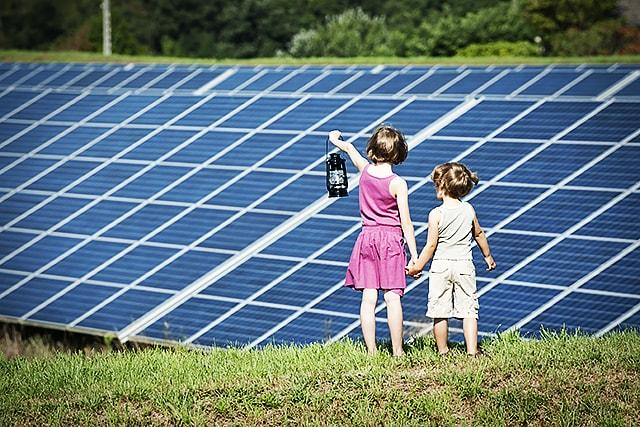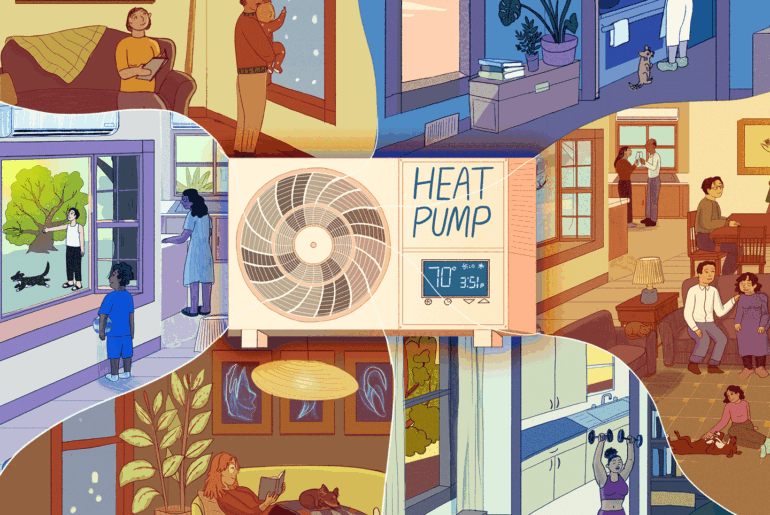

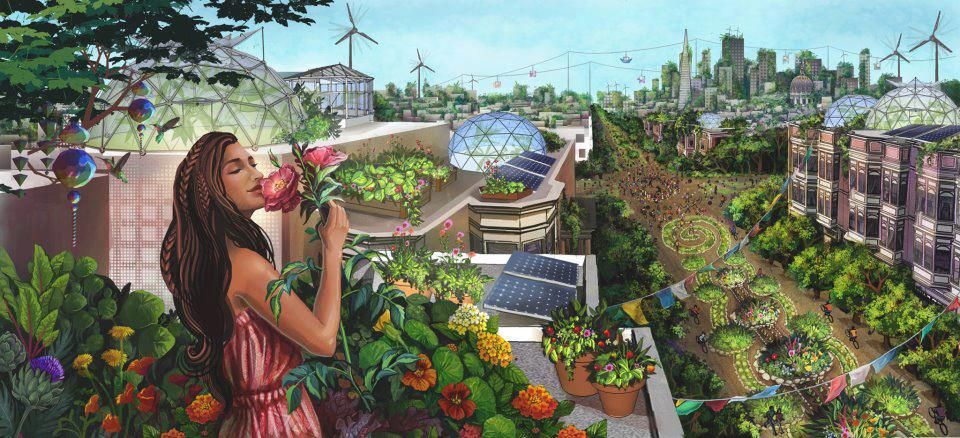
Solarpunk starts with a refreshingly normal premise: clean energy doesn’t have to look like a sacrifice. Instead of treating solar panels, heat pumps, and public transit as grim necessities, it imagines them as the backdrop for greener, calmer, and more fun places to live — neighborhoods where technology and nature don’t compete for space; they team up.
Solarpunk is a sci-fi and art movement that asks a simple question: what would the world look like if we successfully pulled off a clean-energy transition — and did it in a way that made life better? It’s not just “solar panels, but pretty.” It’s a vision of technology and nature not merely co-existing, but thriving together. (Earth Island Institute)
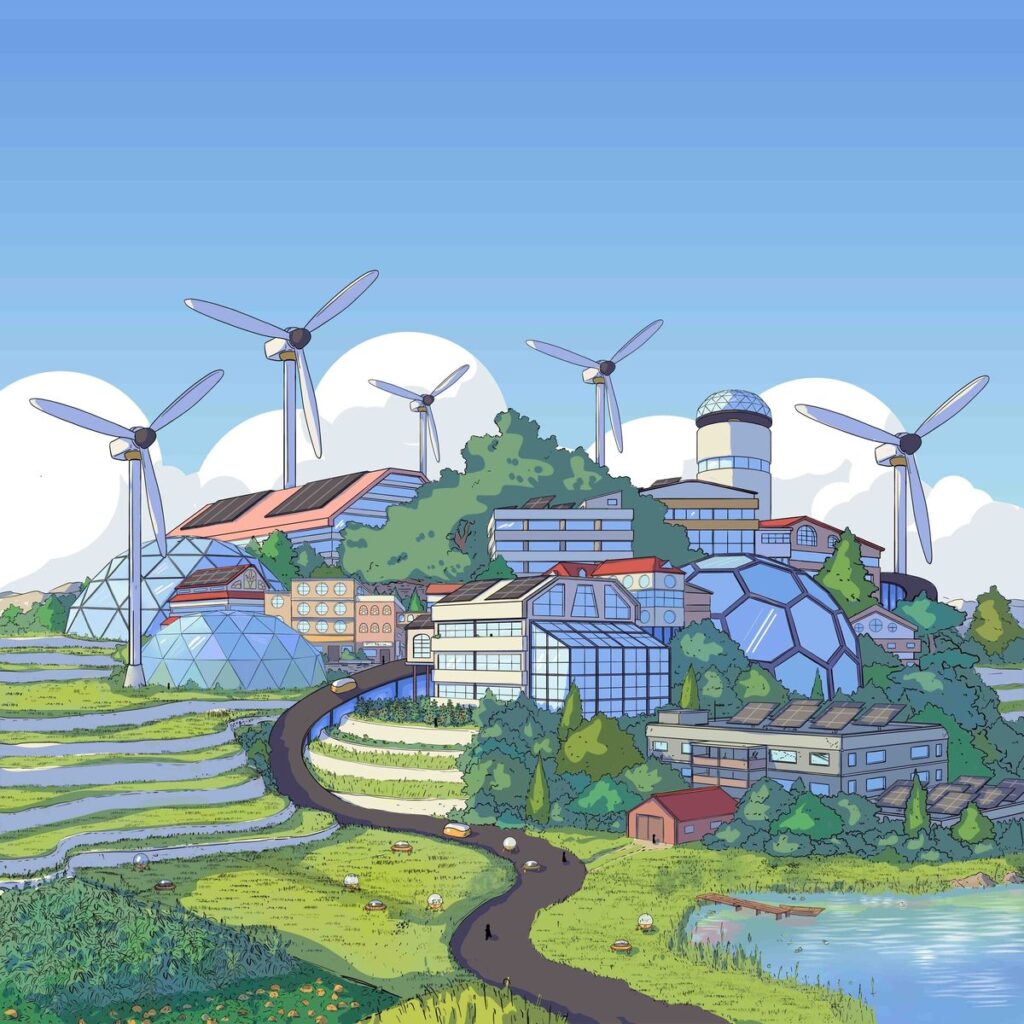
The name does a lot of work. The “solar” is literal (renewable energy) and emotional (optimism, abundance, the belief that “what if?” still matters). The “punk” isn’t about spiky hair so much as pushback: a refusal to accept that the future must be corporate, extractive, or grim. In one widely cited take, Solarpunk is less a tidy genre label than “a movement, a hashtag, a flag” — a statement of intent about the future people want to build. (Wired)
That “build” part is key. Scholars who study Solarpunk emphasize that it’s not meant to float above reality like a screensaver. It’s fascinated by the unglamorous stuff: the systems, the infrastructure, the social arrangements that would make a livable future possible.
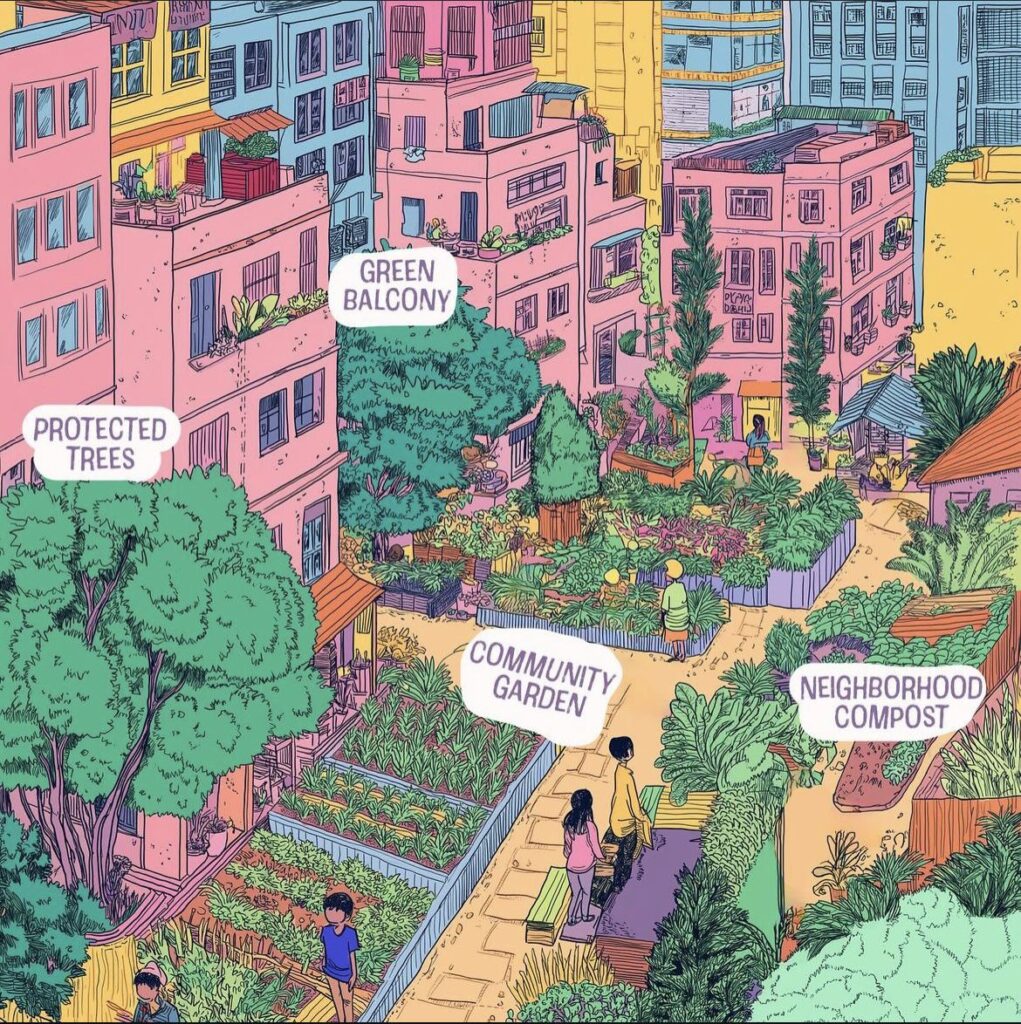
Which is why the aesthetic can be a trap.
Yes, the visuals are part of the draw — sunlit neighborhoods, greenery threaded through architecture, machines that look more like gardens than smokestacks. But writers have also argued that Solarpunk gets flattened when it becomes only a vibe: “plants + glass towers + a few panels,” with none of the politics or care underneath.
At its best, Solarpunk is obsessed with who owns the future. It leans toward local production, community control, and craft — a world where people aren’t just “consumers” of clean energy but participants in it.
That’s not purely fiction. Real-world local energy communities are already showing benefits — from job creation to bill reduction and more resilient power systems, according to the International Energy Agency. (IEA) And projects like community energy clubs in the UK or community-led energy sovereignty efforts in Hawaiʻi hint at the same Solarpunk instinct: keep the tech, but share the power. (The Guardian)
In other words: Solarpunk isn’t promising an easy future. It’s insisting on a future you’d actually want to show up for — and reminding us that imagination can be a form of climate infrastructure, too.