In the early 1930s, much of rural America lived in the dark. While electric lights, refrigerators, and radios were becoming commonplace in cities, nearly 90 percent of urban households had power, but only about 10% of farms did (Shareable). Private utilities saw little profit in stringing lines across sparsely populated countryside, leaving millions of rural families without access to modern electricity.
That gap began to close with the passage of the Rural Electrification Act (REA) of 1936, a cornerstone of President Franklin D. Roosevelt’s New Deal. The law offered low-interest federal loans so rural communities could build their own electric systems (America’s Electric Cooperatives). Instead of waiting for outside companies to invest, neighbors banded together to form Rural Electric Cooperatives (RECs) — nonprofit utilities owned by the people they served.
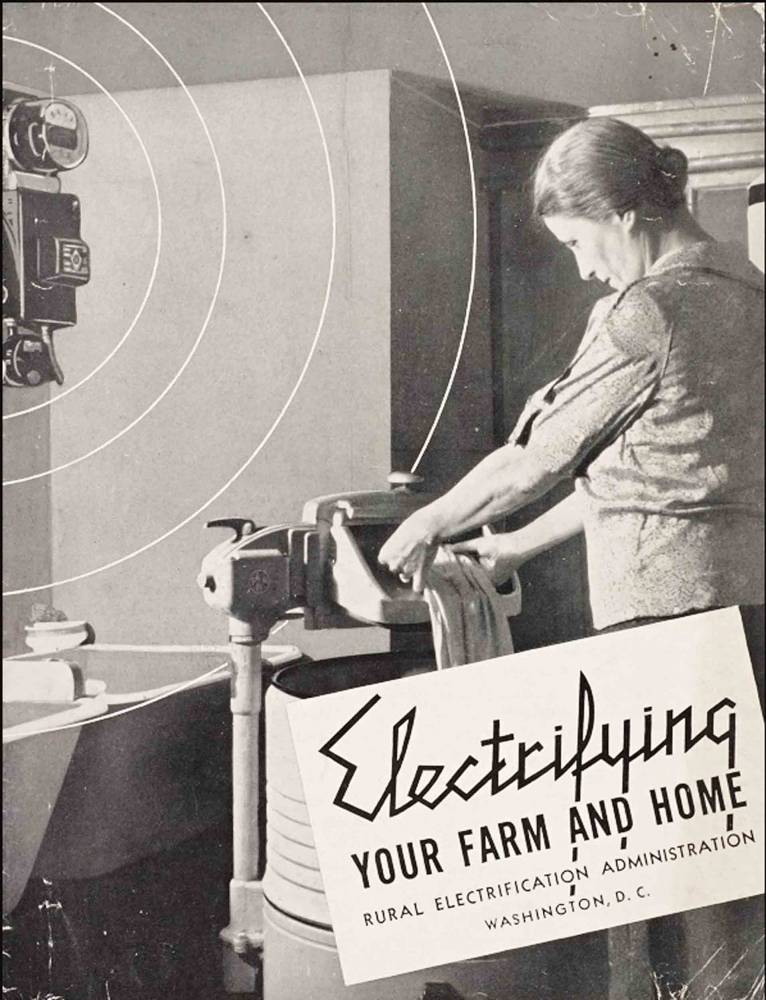
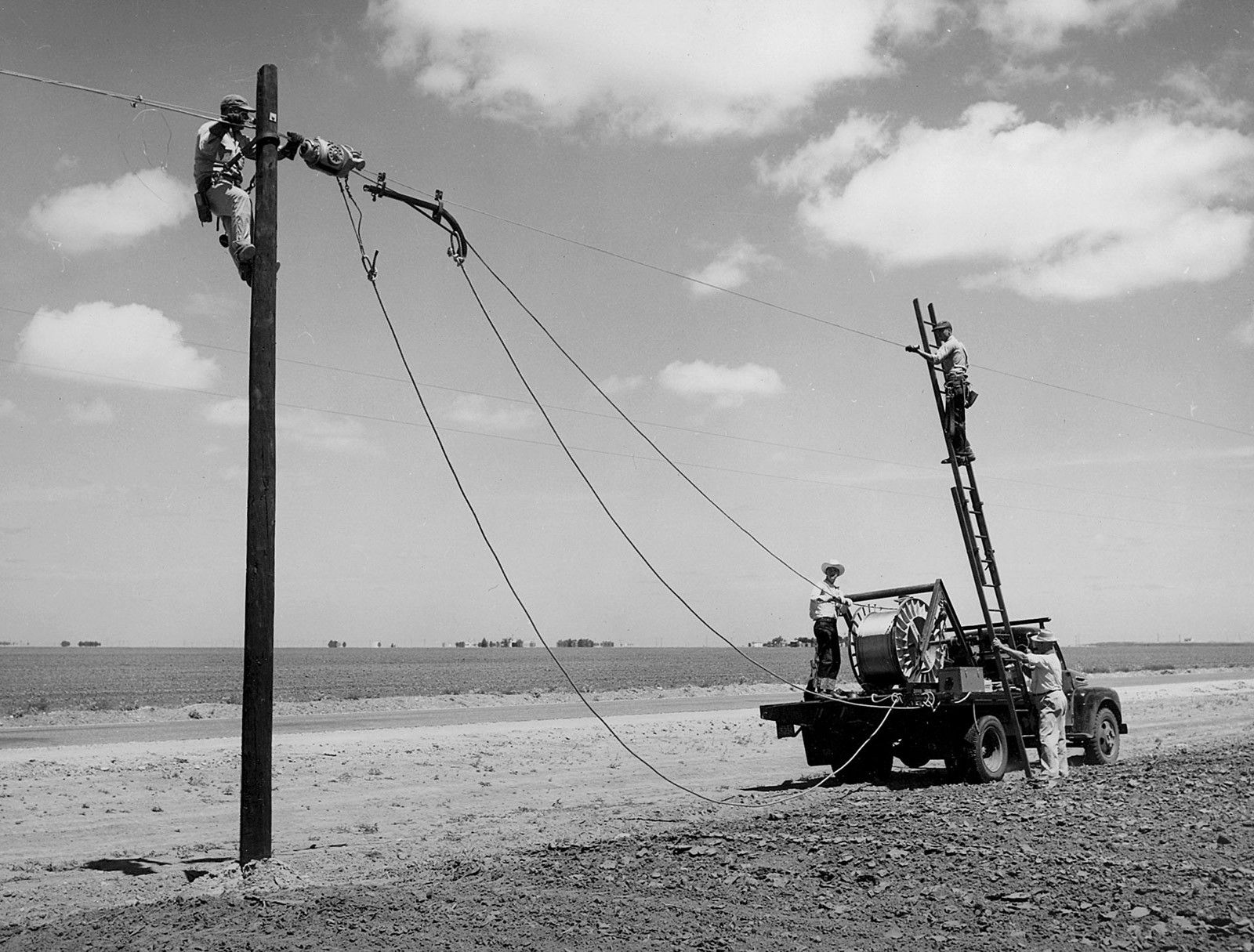
The results were dramatic. Cooperative crews stretched power lines across farmland, gravel roads, and small towns at unprecedented speed. By 1953, more than 90 percent of U.S. farms had electricity (America’s Electric Cooperatives). Power transformed daily life across the Midwest and Great Plains: electric pumps replaced hand-drawn water, refrigeration improved food safety, and new tools boosted farm productivity and rural incomes.
A Democratic Utility Model, Built for Rural Communities
From the start, RECs were built on a simple but powerful idea: one member, one vote. Each customer was also an owner, with the right to elect the cooperative’s board and help guide major decisions (WRECC). That democratic structure distinguished co-ops from investor-owned utilities and rooted them deeply in local communities, especially in states like Minnesota, Wisconsin, Iowa, Illinois, and Michigan, where cooperatives still serve large rural territories.
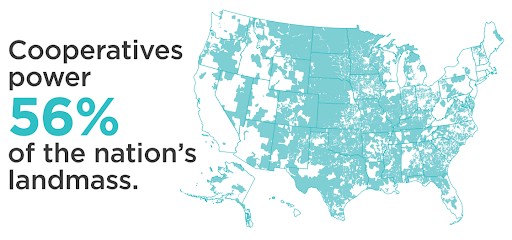
Over time, cooperatives organized at the regional and national levels to share resources and advocate for rural interests. Today, there are nearly 900 electric cooperatives serving more than 42 million people across most of the U.S. landmass (America’s Electric Cooperatives). In many Midwestern counties, the local electric co-op remains one of the largest employers and most important community institutions.
The Role of RECs Today
While cooperatives were born to deliver basic electrification, their mission has expanded. Modern RECs manage complex grids, maintain thousands of miles of power lines, and increasingly invest in new technologies to meet changing needs.
Across the Midwest, many cooperatives are exploring renewable energy, battery storage, and grid upgrades to improve reliability and reduce long-term costs, particularly as extreme weather places new strain on rural infrastructure (WORC). Others support broadband expansion, local economic development, and energy efficiency programs that help members lower their bills (UW–Madison Cooperative Extension).
Crucially, cooperative members are not just customers — they are ratepayers with real power. Members elect the board of directors that sets rates, approves major investments, and determines long-term strategy (WRECC).
Why Voting in Your Electric Co-op Matters
Despite this democratic structure, participation in cooperative elections is often low. That makes individual engagement even more important, especially as co-ops face major decisions about energy costs, reliability, and clean energy investments.
Members who vote and stay involved can:
- Protect local control: Voting helps ensure decisions are made by community members, not distant or corporate interests (WRECC).
- Influence energy choices: Board members help decide whether and how a co-op invests in renewables, storage, or new power plants (WORC).
- Keep rates fair: Directors oversee budgets and long-term planning that directly affect monthly electric bills (UW–Madison Cooperative Extension).
- Strengthen accountability: Active members make boards more responsive and transparent.
- Shape the future: As co-ops modernize their grids, member voices can guide priorities around resilience, affordability, and sustainability.
From the New Deal to today’s clean-energy transition, rural electric cooperatives show what’s possible when communities organize around shared infrastructure. In a cooperative, the lights stay on because members show up, speak out, and vote.