If you’ve noticed more “micro meadows” popping up in yards across the country, you’re not imagining it. These pocket prairies — small gardens filled with native wildflowers and grasses — are becoming informal rest stops for bees, butterflies, and other pollinators. Some are tucked into corners of suburban backyards. Others reclaim entire lawns.
But researchers are now asking a bigger question: What other types of land could we enhance with these pollinator gardens? A new study from Argonne suggests one promising answer: renewable-energy sites.
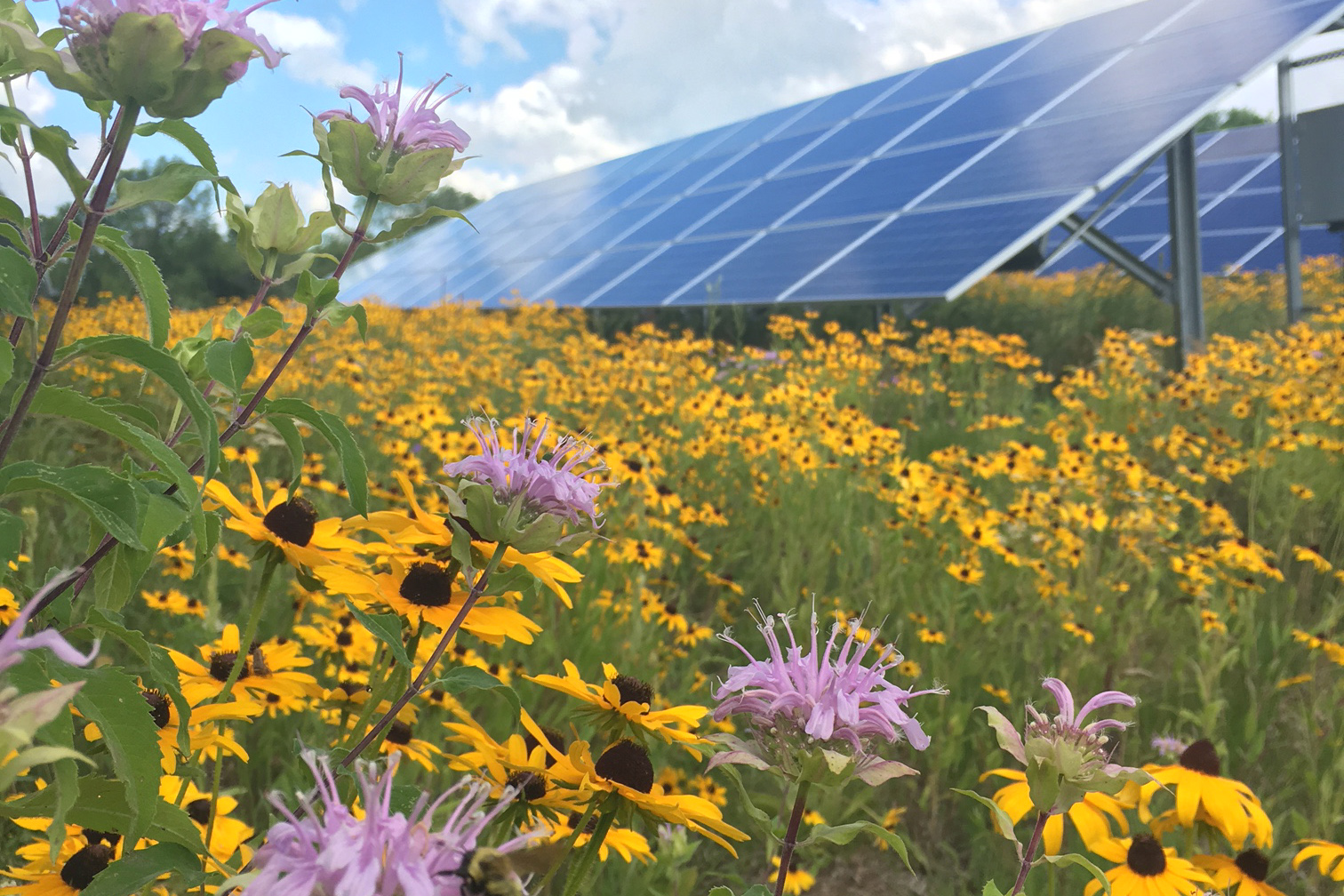
In two utility-scale solar farms in southern Minnesota — built on former cropland and later planted with native prairie species — scientists tracked plant and insect communities from 2018 through 2022. What they found was striking: insect abundance tripled, while native bee counts increased roughly 20-fold. (Argonne National Laboratory)
As the planted habitats matured, researchers measured growing diversity and abundance in flowering plants, and an increase in pollinators and other beneficial insects — including bees, butterflies, moths, beetles, wasps, hoverflies and more. (Business Wire)
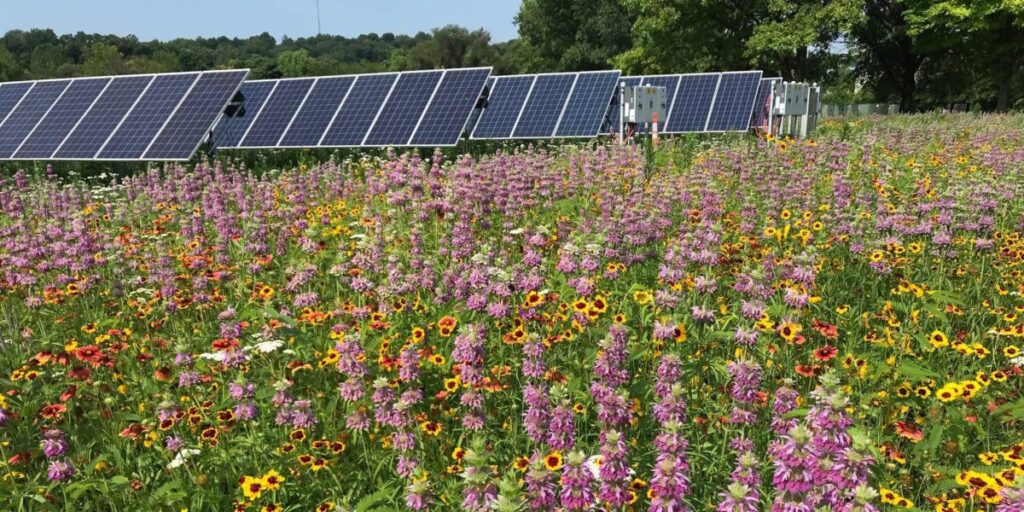
Importantly, the pollination boost didn’t stay behind the solar fences. The study found pollinators originating at the solar-site wildflower patches visiting adjacent soybean fields, potentially helping to improve crop pollination on nearby farmland. (Argonne National Laboratory)
What this suggests: by combining solar power with native-plant restoration, communities may be able to deliver clean energy while simultaneously supporting biodiversity — and even benefitting nearby agriculture.
As micro meadows flourish in backyards, these larger-scale “solar meadows” show what’s possible when ecological restoration meets renewable energy:
- higher insect abundance and diversity
- expanding habitat for native pollinators
- potential crop-pollination benefits for neighboring farmland
- a way to pair clean energy infrastructure with nature-friendly land use
As demand for solar grows, it’s worth asking: should habitat-friendly plantings become the standard — not the exception — under solar arrays?